A different kind of residential move
A large or high-value home is not just a bigger apartment. It has more rooms, but it also has more things that cannot be replaced: a painting that has been in the family for decades, a marble dining table, a wine collection, a chandelier, a grand piano, custom furniture built for the room it stands in. Moving it well depends on planning, on the right materials and on one person being responsible for the whole job.
Our luxury and estate moving service is built around a dedicated move manager. From the first walkthrough to the last room, you deal with one person who knows your home, your schedule and your priorities. The crew is our own, sized for the job, and the plan is written down before anything is packed.
Homes we move
- Houses and estates in Westmount, Outremont, Town of Mount Royal, Hampstead, the lakeshore of the West Island, Hudson and Laval-sur-le-Lac.
- Penthouses and large condos downtown, in Griffintown, on Nuns’ Island and in Old Montreal, where the building’s rules and elevator windows shape the plan.
- Historic residences with narrow stairs, original floors and fragile finishes that need more protection than a modern building.
- Second homes and cottages in the Laurentians, the Eastern Townships or Charlevoix, as part of a move or on their own.
- Estates being settled, where the family, the executor, relatives and auction houses each receive part of the contents.
How we plan a luxury move
The walkthrough
The move manager visits the home — or both homes — and goes through it room by room. We photograph pieces that need special handling, note their size and weight, check doorways, stairs and elevators, and ask what matters most to you. A walkthrough usually takes about an hour. It is the difference between an estimate and a plan.
The written plan
After the visit you receive a written plan and estimate. It lists the crew and the number of trucks for each day, the items that will be crated, the packing that will be done and by when, the sequence of the move and the name of the move manager. If the home is large, the plan may run over two or three days: packing and crating first, then the furniture, then the delivery and setup.
Inventory
Every room gets an inventory with condition notes, and fragile or valuable pieces get photographs before they are wrapped. The inventory is what makes the delivery predictable — every box and piece has a destination room — and it is what protects you if anything is questioned later.
Packing and crating valuable pieces
General household goods are packed in new boxes with the right material for each item: dish packs for china and glassware, wardrobe boxes for clothing, mirror cartons for framed pieces. High-value and fragile pieces get more:
- Artwork is wrapped in glassine or acid-free paper, protected with foam corners and boarded or crated depending on its size and value.
- Stone and glass tabletops are removed from their bases where possible and moved on edge in padded crates.
- Chandeliers and light fixtures are taken down by a qualified electrician if needed, then packed with their crystals separately.
- Antiques are wrapped in soft padding before blankets, so no textured material touches finished surfaces.
- Wine collections travel in dedicated cartons, upright where needed, and away from heat in the truck.
When a piece needs a crate, we build it to the piece. You can read more about how we handle paintings, sculpture and antiques on the fine art and antique moving page.
Multi-truck and multi-day moves
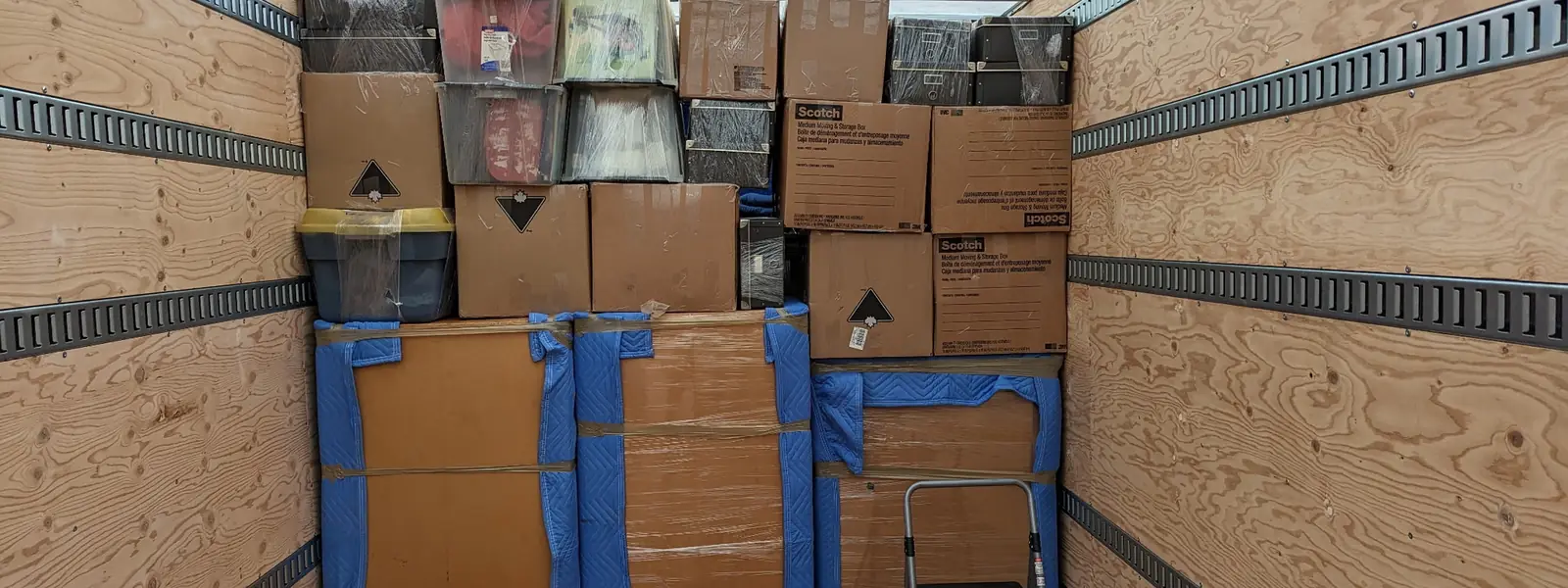
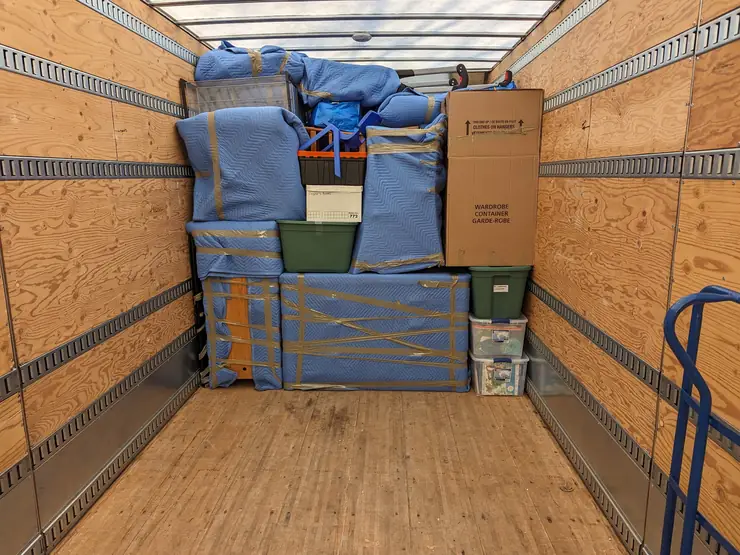
A large home can fill two or three trucks. We plan the loading so that the rooms you need first — kitchen, bedrooms, the home office — arrive first, and so that no truck waits on another. When the move spans several days, the home stays usable: we pack the rooms you use least first, and on the final day we move what you need to live on the last night.
If the new home is not ready — renovation running late, a closing date that moved — part or all of the contents can go into storage and be delivered in phases. The move manager keeps track of what is where.
Protecting the house itself
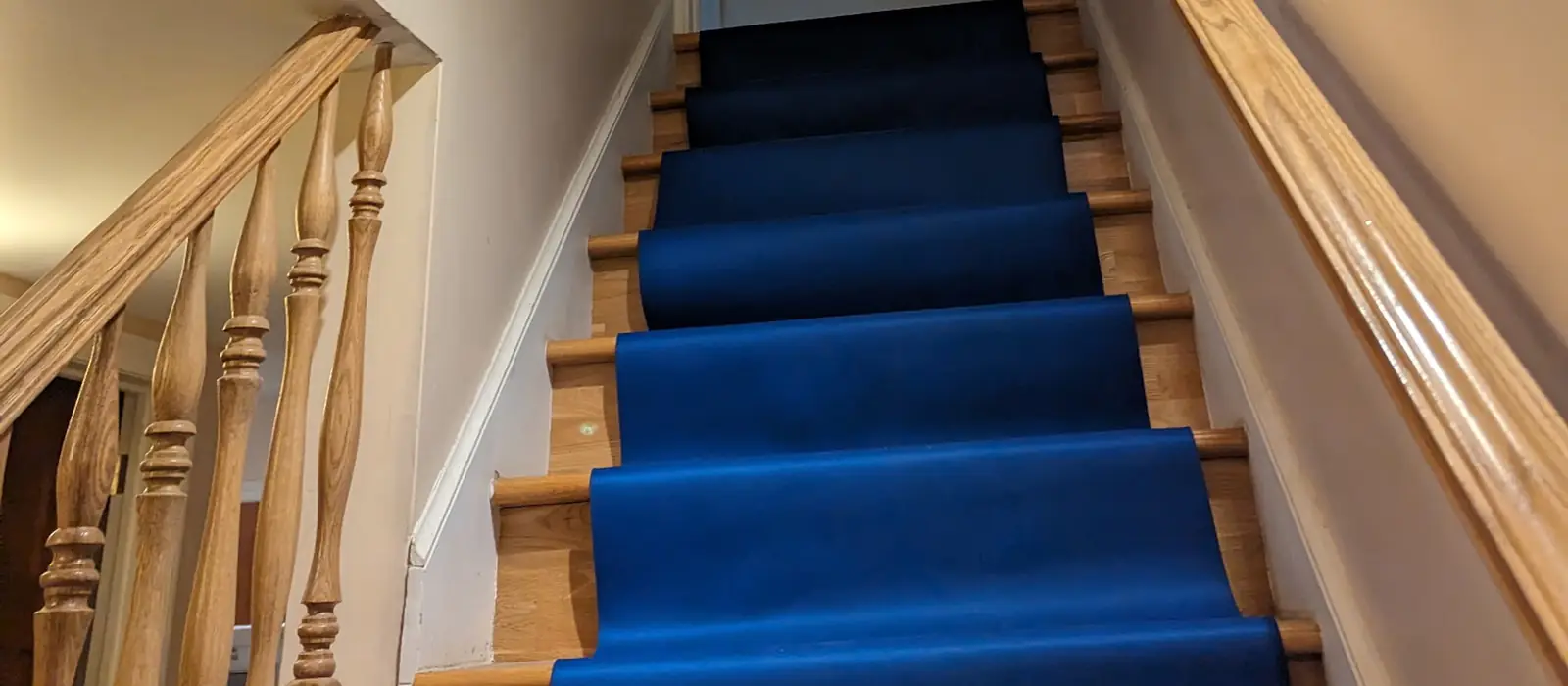
In a large home, the building is as valuable as the contents. Before anything moves, we protect floors with runners and hardboard where needed, wrap banisters and newel posts, cover door frames and corners, and pad the elevator if there is one. At the new home, the same protection goes down before the first piece comes in.
Delivery and setup
At the new address, furniture is placed to a floor plan, beds and tables are reassembled, and fragile pieces are unwrapped in the room they belong in. If you choose full unpacking, the crew unpacks the kitchen, the closets and the bookcases and takes away all the boxes and paper. The move manager does a final walkthrough with you, and anything that needs adjustment is done then, not scheduled for later.
Pricing and insurance
Luxury and estate moves are billed by the hour, at the same rates as our local moves — from $120 per hour for two movers with a 22 ft truck up to $220 per hour for four movers with a 34 ft truck — plus travel time at the same rate. There is no premium for the size or the value of the home. The walkthrough sets the crew, the number of trucks and the days, and the written estimate gives a realistic range of hours; crates and packing materials are billed per item, only for what is used. We carry cargo and liability insurance; for high-value items we ask for a list with declared values before the move so the coverage reflects what is actually on the truck. If your building or insurer needs a certificate, we send it directly.
Discretion
Clients who move high-value homes often care about privacy as much as protection. Our crews do not photograph your home except for the inventory, do not post jobs on social media, and do not discuss clients. If you prefer an unmarked arrival or a particular time of day, say so during the walkthrough.
If you are moving a large home within Greater Montreal, to another city in Quebec or out of the province, the process is the same; for moves out of the region, see long-distance moving for how transport and delivery windows work.
A typical plan for a large home
| Day | What happens |
|---|---|
| Walkthrough, 2–4 weeks before | Room-by-room visit, photos of key pieces, access notes at both homes |
| Preparation day(s) | Crating of art, stone and glass; packing of china, crystal, books and closets |
| Main move day(s) | Furniture wrapped, loaded by room; second truck if needed; kitchen and bedrooms first at delivery |
| Setup day | Unpacking, reassembly, placement to the floor plan, removal of all materials |
The number of days depends on the size of the home and whether you want packing and unpacking. For most large homes, a four- or five-day plan is comfortable; for smaller ones, preparation and the move can fit into two days.
What makes a luxury move different from a standard one
The difference is not the truck. It is the time spent before the move — the walkthrough, the inventory, the crating plan — and the number of people who touch your belongings. On a standard move, the crew makes decisions on the day. On a luxury or estate move, most decisions are made in advance, written down and assigned. The move manager knows which piece goes in which crate, which room is delivered first and who at the new home decides where the art goes.
It is also a question of pace. Large homes are moved more slowly, with more protection and more checks. The hourly rate is the same as for any local move; what changes is the number of hours and people the plan calls for, and the walkthrough is what makes that number realistic before the first piece is wrapped.
Working with your other professionals
High-value moves rarely involve only the mover. We coordinate with your interior designer on placement, with your art advisor or gallery on crating and hanging, with your insurer on declared values and certificates, with the building management of a condo or penthouse, and with contractors finishing the new home. The move manager is the single point of contact for all of them.
Estates and family homes
When a family home is being emptied — after a death, a move into care or a sale — the move is emotional as much as logistical. We work at the family’s pace, move what each person keeps to their own address, deliver furniture to auction houses, consignment stores or charities, and arrange disposal for the rest. The executor or family representative receives a record of what went where.
Declared values and insurance
For a high-value home, the most important insurance question is not whether the mover is insured — it is whether the coverage matches what is on the truck. Before the move, we ask for a list of high-value items with their declared values: art, antiques, sterling silver, collections, designer furniture. That list, with the photographs from the inventory, sets the coverage for the move. Some clients also hold a fine-art or valuables policy of their own; check whether it covers transit, and we will provide whatever documentation your insurer needs.