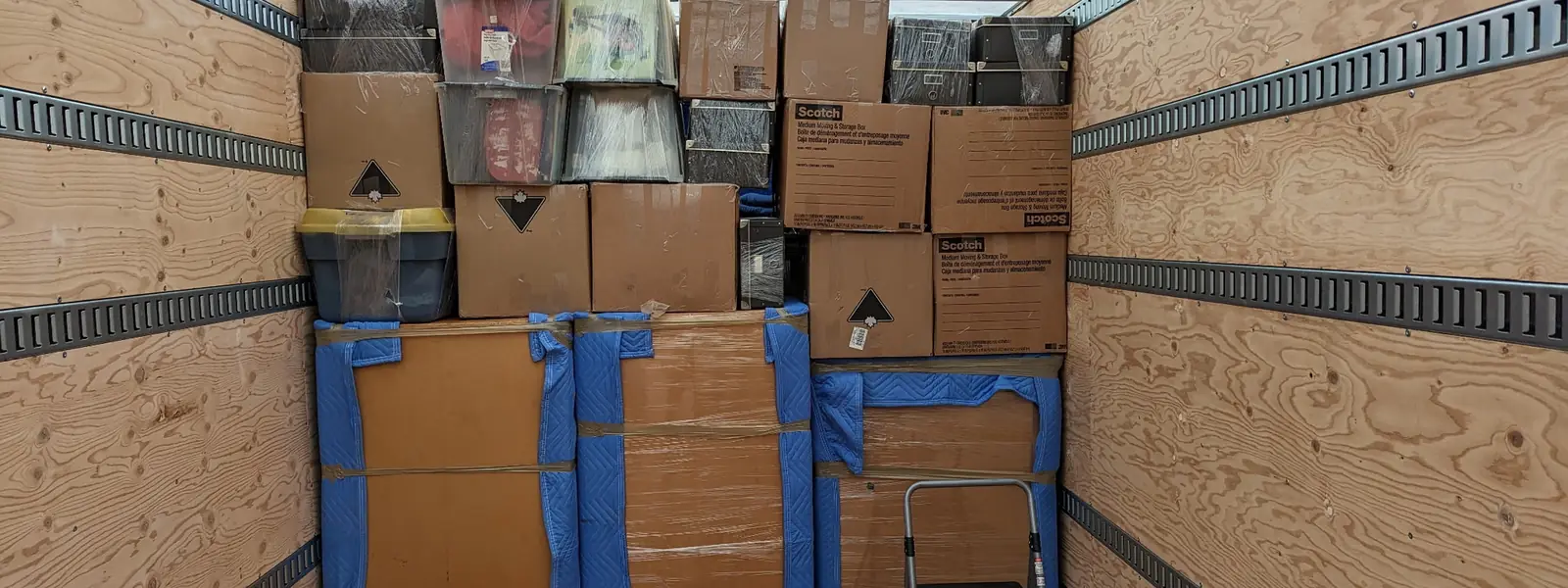
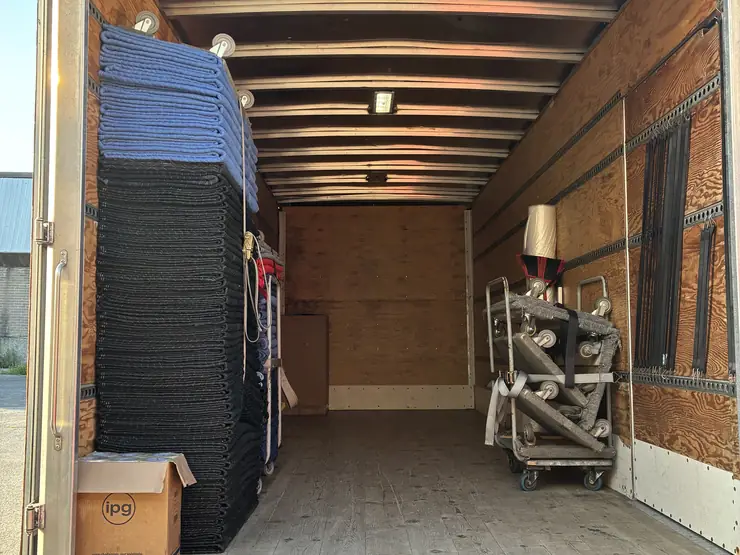
Moving to Montreal from the United States
Some people are coming home after years in New York or Boston; others are arriving in Canada for the first time, for work, study or family. For both, the move north turns on one moment that has nothing to do with the truck: the first time you cross into Canada, you have to declare everything that is going to follow you. Get that moment right and the rest of the move is logistics. Miss it and goods that could have entered free of duty and tax may not.
We survey your US home, prepare the lists with you before you travel, and then do the moving: pickup at your US address, transport, and delivery to your new home on the island, in Laval or on either shore.
The BSF186 and the list of goods to follow
Canada’s customs service, the CBSA, asks people moving here to account for their personal and household effects on form BSF186, the Personal Effects Accounting Document — still often called by its old name, the B4. It works with a list of your goods, in two parts:
- goods you bring with you when you arrive;
- goods to follow — the truckload that arrives later, often listed on form BSF186A.
You present two copies of the list the first time you arrive in Canada as a resident, even if the truck is still in the US. The officer stamps your BSF186. When your shipment reaches the border, that stamped document is what it is cleared against. Goods that are not on the list at your first arrival generally cannot be added later under the same duty- and tax-free treatment.
That is why we prepare the list with you before you travel, from the same numbered inventory the truck will be loaded against. The list should give a value for each item, and a make, model and serial number where there is one — electronics, appliances, tools, bicycles, instruments.
Returning residents and settlers
The conditions depend on who you are:
- Returning residents — Canadians and permanent residents coming back after living abroad for a year or more — can generally import their goods free of duty and tax if they owned, possessed and used them abroad for at least six months. Each item worth more than CAN$10,000 is subject to duty and taxes on the amount over that limit. The six-month condition does not apply if you lived abroad for five years or more.
- Settlers — people establishing a residence in Canada for the first time — can generally import goods they owned, possessed and used before arriving, free of duty and tax. Wedding gifts can qualify when you married within three months of arriving.
The CBSA publishes the details and decides each case. If you are bringing a business, a large collection or anything unusual, a customs broker is worth the fee.
What to leave in the US
Some goods are restricted or controlled at the Canadian border and can hold up a shipment:
- firearms and weapons, which must be declared and meet Canadian requirements;
- alcohol and tobacco beyond the personal allowances, which are taxed;
- food, plants, seeds, soil and animal products;
- prescription drugs and health products in quantity;
- items of cultural property;
- hazardous materials such as propane, gasoline and paint.
We go through the inventory with you before loading and set aside anything that could delay the shipment.
Vehicles and pets
A vehicle imported from the US goes through the Registrar of Imported Vehicles (RIV), and not every vehicle is admissible — check the RIV list and the paperwork before you plan the move around your car. Pets travel with you, never in the moving truck, and must meet the current Canadian entry requirements.
Arriving in Montreal
The last part of the move is local, and Montreal has habits of its own. Street parking for the truck usually needs a temporary permit from your borough, which you request; many apartments are walk-ups with outdoor staircases; condo buildings want an elevator booking and a certificate of insurance; and July 1 is the busiest moving day of the year. We plan the delivery around all of it, and if your new home is not ready, your belongings can wait in storage.
What the move looks like
- Video survey of your US home; restricted items flagged.
- Fixed price in writing, naming who carries the shipment across the border.
- Your lists — inventory and goods to follow — ready before you travel.
- Your first arrival in Canada: present the lists, get your BSF186 stamped.
- Pickup and transport from your US address.
- Clearance and delivery, unloading, reassembly and placement room by room.
For the move in the other direction, see moving to the USA. For planning and pricing in both directions, see Canada–USA moving.