Moving fine art and antiques in Montreal
A painting cannot be wrapped in a moving blanket. An antique table cannot be stretch-wrapped straight onto its finish. A marble top cannot lie flat in a truck, and a sculpture cannot share a box with anything. Fine art and antiques are damaged by the same things that protect ordinary furniture: pressure, friction, plastic trapped against a surface, the wrong kind of padding.
We pack and move paintings, sculpture, antique furniture and collections for private homes, collectors, galleries and artists across Greater Montreal and beyond. Each piece is assessed, wrapped with the right materials and, when needed, crated to fit.
What we move
- Paintings and works on paper — canvases, framed works, prints and photographs
- Sculpture — bronze, stone, ceramic, glass and mixed media
- Antique furniture — cabinets, armoires, tables, chairs and case pieces
- Mirrors and glass — large framed mirrors, glass tabletops and display cases
- Collections — ceramics, silver, books, instruments and objects
- Gallery and studio moves — exhibitions, rehangs and studio relocations
How we pack art
Paintings and framed works
Framed works are wrapped in glassine or acid-free tissue to protect the surface, then protected with foam corners and padding. Glass-fronted frames get tape or a protective film so that, if the glass breaks, it cannot damage the work. Depending on size and value, the piece is then boarded between rigid sheets, placed in a picture carton or packed in a custom crate. Unframed canvases are never allowed to touch anything on their painted surface; they travel in a travel frame or crate that holds them by the stretcher.
Sculpture
Sculpture is padded with foam shaped to the piece and supported at its strongest points, never at its thinnest. Fragile parts are secured so they cannot vibrate. Most sculpture travels in a crate, with foam blocking that holds it in place.
Antique furniture
Antiques are wrapped in soft padding first, so that no textured blanket or plastic touches the finish directly; blankets go over the padding. Drawers are secured, doors are tied closed, and removable parts — glass doors, shelves, finials, marble tops, hardware — are removed, labelled and packed separately. Old joints are not stressed: we lift case pieces from their base, never by their tops or doors.
Stone, marble and glass
Marble and stone tops are removed from their bases where possible and moved on their edge, padded and supported along their length. Laid flat, a slab can crack under its own weight when the truck moves. Glass tabletops travel in padded crates or glass cartons, also on edge.
Custom crates
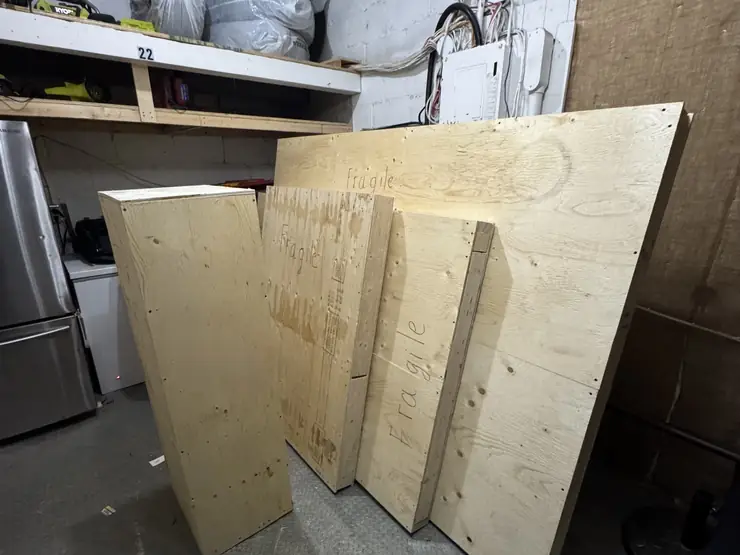
When a piece needs a crate, we build one to fit it: measured, lined with foam where needed, with the piece held so it cannot move inside. Crates are marked with the orientation and handling instructions. For pieces leaving Canada, crates are made of heat-treated wood stamped to the ISPM 15 standard, which most countries require for wooden packaging.
Transport
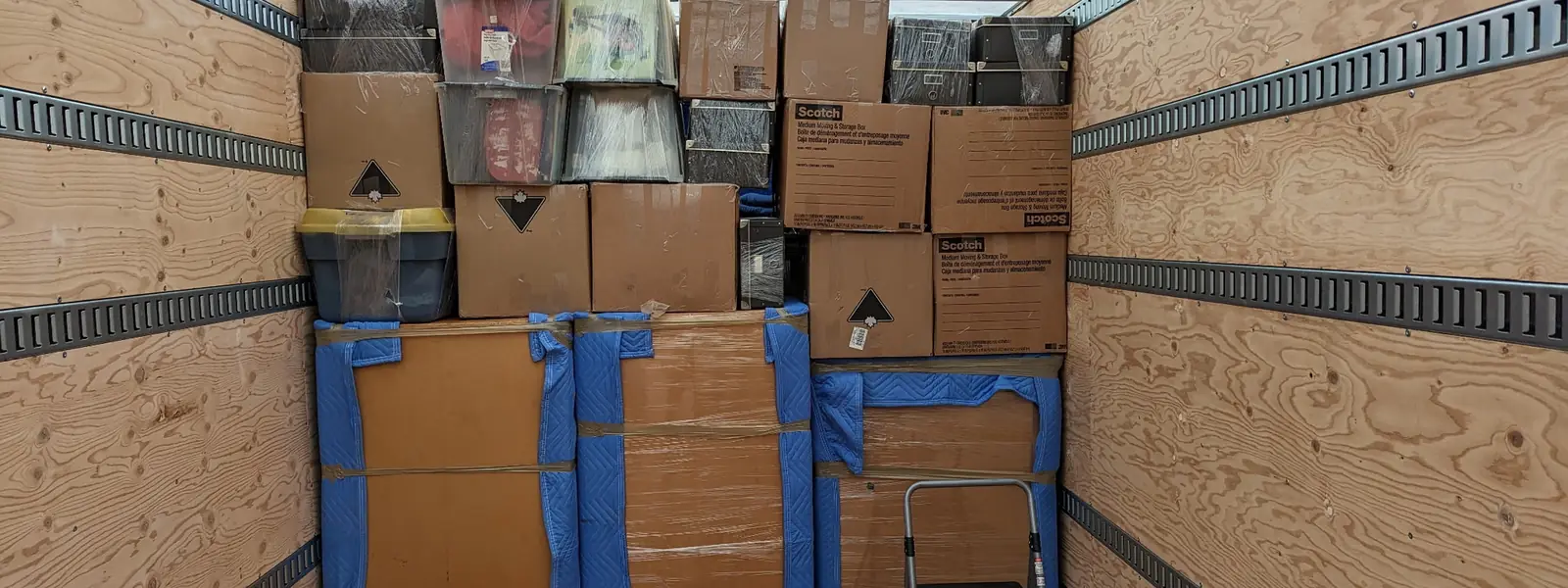
Art and antiques are loaded separately from ordinary household goods, secured upright to the truck wall and never stacked under anything. We plan the route and timing to avoid long waits in a parked truck. In winter, we avoid leaving sensitive pieces exposed to cold for long periods and plan short, direct runs.
For works that require climate-controlled transport over long distances, we arrange it with a specialist fine-art carrier and handle the packing and crating here.
Condition reports and insurance
Before packing, we note the condition of each significant piece and photograph it. That record protects you and us: if a question comes up later, the condition before the move is documented. Goods in our care are covered by our insurance; for high-value works, send us a list with declared values before the move so the coverage reflects what is on the truck, and check whether your own fine-art policy covers transit.
Galleries, artists and collectors
We work with galleries on exhibition changes and relocations, with artists moving studios, and with collectors moving or lending works. For institutional and exhibition moves, we can follow your own packing specifications and condition-report process.
Art and antiques as part of a home move
Most of the art and antiques we move are part of a larger home move. In that case, the pieces are assessed during the walkthrough, packed and crated a day or two before the main move, and delivered and unpacked in the right rooms. For large or high-value homes, see luxury and estate moving; for international moves, see international moving.
How to prepare
- Make a list. Include each piece, its size, its approximate value and any special instructions.
- Leave the hanging hardware. We remove works from the wall; tell us if any hardware is unusual.
- Keep documentation together. Certificates, appraisals and provenance papers should travel with you, not in the truck.
- Tell us about fragility. Flaking paint, loose parts or previous repairs change how a piece is packed.
Send us photos of the pieces and the addresses, and we will reply with how we would pack them and a price per piece or for the whole collection.
Packing levels for art
| Level | What it involves | Suitable for |
|---|---|---|
| Soft pack | Glassine or acid-free tissue, foam corners, padded wrapping | Framed prints, modest works, short local moves |
| Boarded pack | Soft pack plus rigid boards on both faces | Framed paintings and works on paper, local and regional moves |
| Travel frame | Work held by its stretcher or frame in a padded frame, no contact with the surface | Unframed canvases, fresh or delicate paint |
| Custom crate | Wooden crate built to the piece, foam-lined | Valuable, fragile or large works; long distance; shipping abroad |
We recommend the level for each piece during the assessment and explain why.
Caring for antiques and works in winter
Montreal winters are hard on art and antiques. Cold, dry air and fast changes in temperature can crack veneers, loosen joints, split panels and stress paint layers. In winter we keep sensitive pieces wrapped until they reach room temperature at the new home, avoid long stops with pieces in the truck, and plan the most direct route. After the move, give antique furniture and paintings a few days to adapt before placing them near heating vents or exterior walls, and keep indoor humidity reasonable.
Common mistakes with art and antiques
- Plastic wrap directly on a finish or painting. Plastic traps moisture and can stick to finishes. We use padding first.
- Bubble wrap against a painted surface. It can leave an imprint. Glassine goes first.
- Carrying case furniture by its top or doors. Old joints fail. Lift from the base.
- Leaving marble tops on their bases. They crack when the furniture flexes. Remove and move on edge.
- Transporting paintings flat under other items. Paintings travel upright, alone, and secured.
Documentation for insurers and lenders
For collectors lending works to exhibitions, or for insurers requiring documentation of transport, we can provide a condition record with photographs before packing and at delivery, a description of the packing used, and the chain of custody from pick-up to delivery. Tell us at the time of booking what your insurer, lender or gallery requires.
Art as part of an international move
Moving art abroad adds export paperwork and packing requirements. Crates must meet the ISPM 15 standard for wooden packaging, and some works — antiques, cultural property, items made from protected species — may need export permits. We handle the packing and crating in Montreal and coordinate with the freight forwarder and, where needed, a customs broker. See international moving.
Placement and hanging at the new home
At the destination, works are unpacked in the room where they will live, not in the hallway or the garage. Pieces are placed against walls on padded blocks until hung, never leaning on each other face to face. We hang works on existing hooks and standard picture hardware; for heavy works, mirrors or installations that need new anchors in plaster, concrete or brick, we recommend a professional installer, and we can coordinate the timing so the installer arrives while the pieces are unpacked. Antique furniture is placed and levelled, removed parts — glass doors, shelves, marble tops — are reinstalled, and all packing material is taken away.
Galleries and exhibitions
For galleries and exhibitions, timing matters as much as handling: a show opens on a fixed date, and a rehang happens in a narrow window when the space is closed. We plan these moves around the gallery’s schedule, follow its packing specifications and condition-report forms, and can work outside public hours.
Small collections and single pieces
Not every art move is a whole collection. We regularly move a single painting to a framer, a sculpture to a new owner across town, an antique armoire from a family home to a grandchild’s apartment, or a few works to and from an exhibition. Single-piece moves are priced per piece, including the packing or crate it needs, and can often be scheduled within days.
Glass, acrylic and frames
Framed works behind glass need special care: if the glass breaks in transit, shards can cut into the work. For valuable pieces we tape the glass in a grid pattern or apply a low-tack protective film before packing, so a break stays in place. Acrylic glazing does not shatter but scratches easily, so it is never taped and is protected with soft padding instead. Ornate or gilded frames are wrapped in soft material first, because corner protectors and tape can damage gilding. If a frame is fragile, we may recommend crating the work in its frame rather than boarding it.