Piano moving in Montreal
A piano is the heaviest thing most families own, and the most fragile heavy thing anyone moves. It is anywhere from 400 to more than 1,000 pounds of wood, cast iron and tensioned strings, with a finish that marks at a touch and legs that were never designed to carry the instrument sideways. Montreal adds its own challenge: many pianos live on the second or third floor of a plex, reached by an outdoor staircase with a turn at every landing.
Our crews move upright, baby grand and grand pianos across Montreal, Laval, both shores and beyond. We bring the right equipment, protect the building before the piano moves, and give you a price per piano before the day.
Uprights, baby grands and grands
Upright pianos
Uprights include spinets, consoles, studio pianos and tall older uprights. Most weigh between 450 and 900 pounds, with the weight concentrated high and at the back. An upright is wrapped in padded covers, strapped to a four-wheel piano dolly for flat surfaces, and carried on the stairs by a crew that has done it many times. Older full-size uprights are the heaviest and need the largest crew.
Baby grand pianos
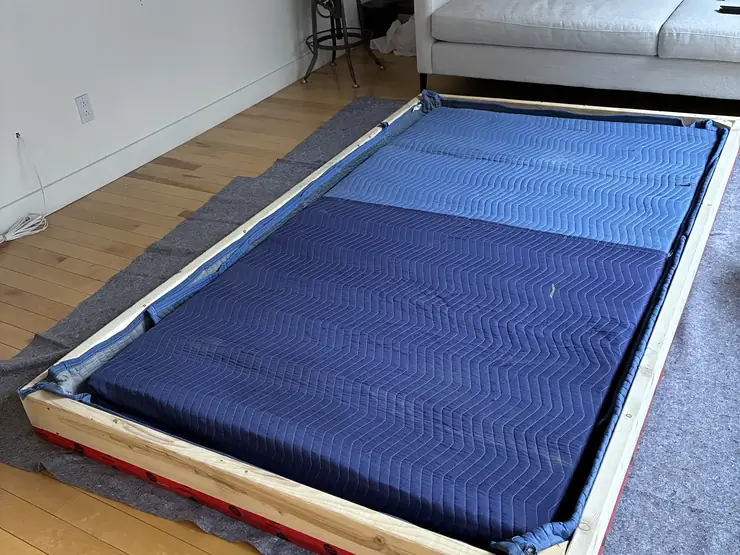
A baby grand is moved on its side. The lid and music desk are secured, the pedal lyre and legs are removed, and the body is wrapped, laid on its straight side on a padded piano board and strapped. On the stairs it is carried on the board. At the new home, it is lifted back onto its legs and the lyre and pedals are reattached.
Grand pianos
Grand pianos follow the same method as baby grands, but they are longer and heavier, which affects the crew size, the turns they can make and whether the entrance works at all. We look at the route carefully before quoting a grand.
What piano moving costs
| Piano and access | Price |
|---|---|
| Upright, ground floor or elevator at both ends | from $350 |
| Upright, with stairs | quoted per flight of stairs |
| Baby grand | quoted after a photo and the access |
| Grand piano | quoted after a photo and the access |
The price is for the piano and includes the crew, the equipment, the wrapping, and removing and reattaching legs and pedals. If the piano is part of a full move, it goes on the same quote. There is no charge for the time spent protecting floors and stairs — it is part of the job.
Montreal staircases and pianos
Most of the questions we get about pianos in Montreal are about stairs. Outdoor spiral staircases, interior stairwells with tight landings, basements with low ceilings — each can be possible or impossible depending on a few centimetres. Before we quote a piano with stairs, we ask for:
- A photo of the piano and its approximate height and length
- The number of flights at each address, indoor or outdoor
- Whether the stairs turn, and how tight the turns are
- The width of the door and any landing where the piano must pivot
If a piano will not fit safely, we say so before the day, not on the landing. Sometimes the answer is to remove a door or a railing; sometimes it is a crane lift through a window or balcony; occasionally it is that the piano should stay where it is.
Protecting the piano and the building
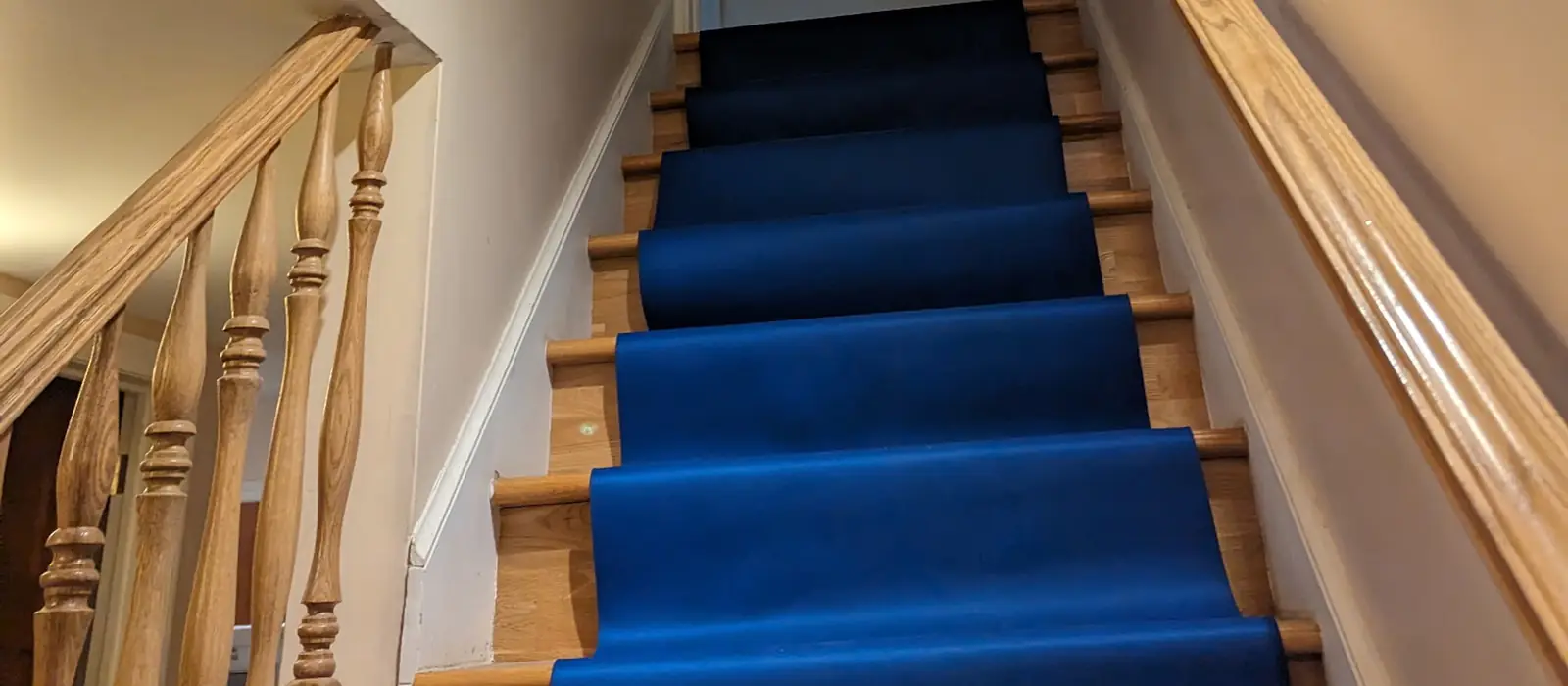
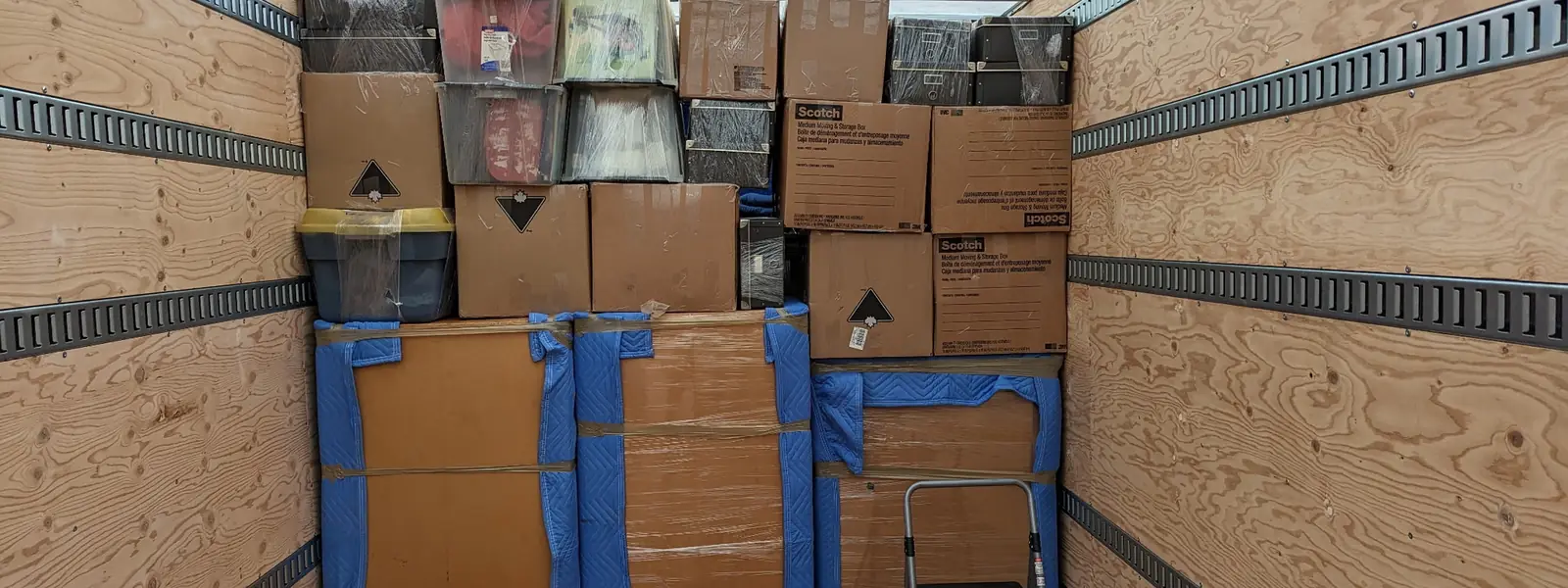
The piano is wrapped completely in padded covers and secured so nothing moves inside it. The lid is closed and secured, keys are covered, and grands have legs, lyre and pedals removed and packed. Before the piano moves, floors are covered, banisters padded and door frames protected. In the truck, the piano is strapped to the wall and never has anything stacked on it.
Moving a piano across the province or across Canada
Pianos travel well on long-distance moves when they are packed and loaded properly. We move pianos as part of a full move or on their own to Quebec City, Ottawa, Toronto and further, secured upright or on a board depending on the instrument. See long-distance moving for how pricing and delivery windows work.
After the move: tuning and settling
Moving does not usually damage a piano’s mechanism when it is done well, but changes in temperature and humidity will affect the tuning. Let the piano settle in its new room for a couple of weeks, away from radiators, heating vents and direct sun, then call a tuner. In winter, avoid leaving a piano in an unheated space.
Piano storage
If your new home is not ready or the piano is waiting for a buyer, we can store it wrapped in our secure facility and deliver it when you are ready. See storage.
Pianos for schools, churches and venues
We also move pianos for schools, churches, concert venues, studios and piano retailers, including between floors of the same building. Institutions often need the move on a particular day or outside public hours; tell us your constraints and we will plan around them.
How to book
Send a photo of the piano and a short description of the access at both addresses through the form below, or call us. We will reply with a price per piano, the crew we will send, and any questions about the route. For other heavy items — safes, pool tables, gym equipment — see specialty moving.
Types of pianos and what they mean for the move
| Piano | Typical height or length | Typical weight | How it moves |
|---|---|---|---|
| Spinet or console | about 35–43 in tall | 330–550 lb | upright on a dolly |
| Studio upright | about 43–49 in tall | 450–650 lb | upright on a dolly |
| Full-size or antique upright | 49–59 in tall | 550–900 lb | upright, larger crew |
| Digital piano | varies | 65–220 lb | boxed or wrapped like furniture |
| Baby grand | about 4½–5½ ft long | 550–770 lb | on its side on a piano board |
| Grand or concert grand | 5½–9 ft long | 650–1,100 lb+ | on its side on a piano board, larger crew |
Weights are typical ranges; a specific instrument may differ. Digital pianos are moved as ordinary furniture and are not priced as specialty items.
Why piano moving is priced separately
A piano needs equipment that is not on a standard moving truck, a crew trained to use it, and extra time for wrapping, strapping and protecting the building. It also carries more risk: a slip on a staircase can damage the piano, the stairs and the people carrying it. Pricing it separately, before the day, means the right people and equipment are scheduled and there are no surprises on moving day.
Mistakes to avoid
- Moving a piano with friends or a general crew. Most piano injuries and damage happen when people without the right equipment try to carry one down stairs.
- Lifting by the legs or lid. Legs on uprights and grands are not designed to carry weight sideways.
- Rolling on the piano’s own casters. Built-in casters are decorative on most pianos and can break or damage floors.
- Putting a piano against a radiator or in the sun. Heat and dry air affect the soundboard and tuning.
- Tuning immediately after the move. Wait a couple of weeks for the piano to settle.
Pianos for students, teachers and families
Many of the pianos we move belong to families with children taking lessons, piano teachers moving their studio, and students heading to music programs. For teachers, we can move the piano on a day that avoids lessons; for families, we place it where it will stay away from heat sources and exterior walls.
Moving a piano in winter
Montreal winters add two risks to a piano move: cold and ice. Pianos are sensitive to sudden temperature changes, so in winter we keep the instrument wrapped and move it directly from one heated space to the other, without long stops in the truck. Outdoor stairs and walkways must be cleared of snow and ice before we start — we check them on arrival and salt or clear what we can, but a staircase that is not safe will not be used. After a winter move, let the piano warm up to room temperature before opening it and wait before tuning.
Pianos in condo towers and elevator buildings
Condo buildings make piano moves easier on the stairs but add their own requirements: the elevator must be large enough (a grand piano on its side needs a deep cab), the building usually requires a reservation and a certificate of insurance, and floors in hallways must be protected. We measure the elevator in advance, book it with you and send the certificate to the manager.
Moving a piano within the same home
Sometimes the piano only needs to go to another room or another floor — after a renovation, or to make space. We handle these moves with the same equipment and care, and they are often quick.
Pianos in houses with basements and split levels
In West Island split-levels and Laval bungalows, pianos often live in a basement family room reached by a narrow staircase with a turn at the bottom. These moves are about geometry: the height of the piano against the ceiling at the turn, and the width of the stairwell. We measure both before quoting. When a piano went down years ago before a renovation narrowed the stairs, it sometimes cannot come back up the same way — and we will tell you that from the measurements, not halfway up the stairs.
Benches, lamps and accessories
Piano benches, stools, music lamps and sheet music are moved with the piano. Bench seats with storage should be emptied or the lid taped shut, lamps are packed separately, and loose sheet music goes into boxes. Digital pianos, keyboards and their stands are packed like electronics and moved as regular furniture, without the specialty charge.