Moving tips
Packing Hacks: Efficient Ways to Pack Your Belongings
Practical packing tips from the people who carry the boxes: what to pack first, how to protect fragile items, and the small habits that save hours on moving day.
Packing is the part of a move that takes longest and the one that decides how smoothly moving day goes. A well-packed home moves quickly: boxes stack, nothing breaks, and the crew never waits. A badly packed one turns an hourly move into a long, expensive day. These are the habits our packers use every day — and the ones we wish every customer knew.
Start with a plan, not a box
Before you tape a single box, walk through the home and decide what is not coming. Anything you sell, donate or throw away now is something you do not have to pack, carry or pay to move. Then plan the order: pack the rooms you use least first — the basement, the guest room, the bookcases, the storage locker — and leave the kitchen and bedrooms for the last few days.
Give yourself more time than you think. Most people underestimate packing by about half. A one-bedroom apartment takes most people several evenings; a family house, a couple of weeks.
Use the right boxes
- Small boxes for heavy things: books, files, tools, canned goods. A large box of books is too heavy to lift safely and often splits.
- Medium boxes for most things: kitchen items, toys, small appliances.
- Large boxes for light things: linens, pillows, lampshades, stuffed toys.
- Wardrobe boxes for hanging clothes — the biggest time saver there is.
- Dish packs with cell dividers for plates and glasses.
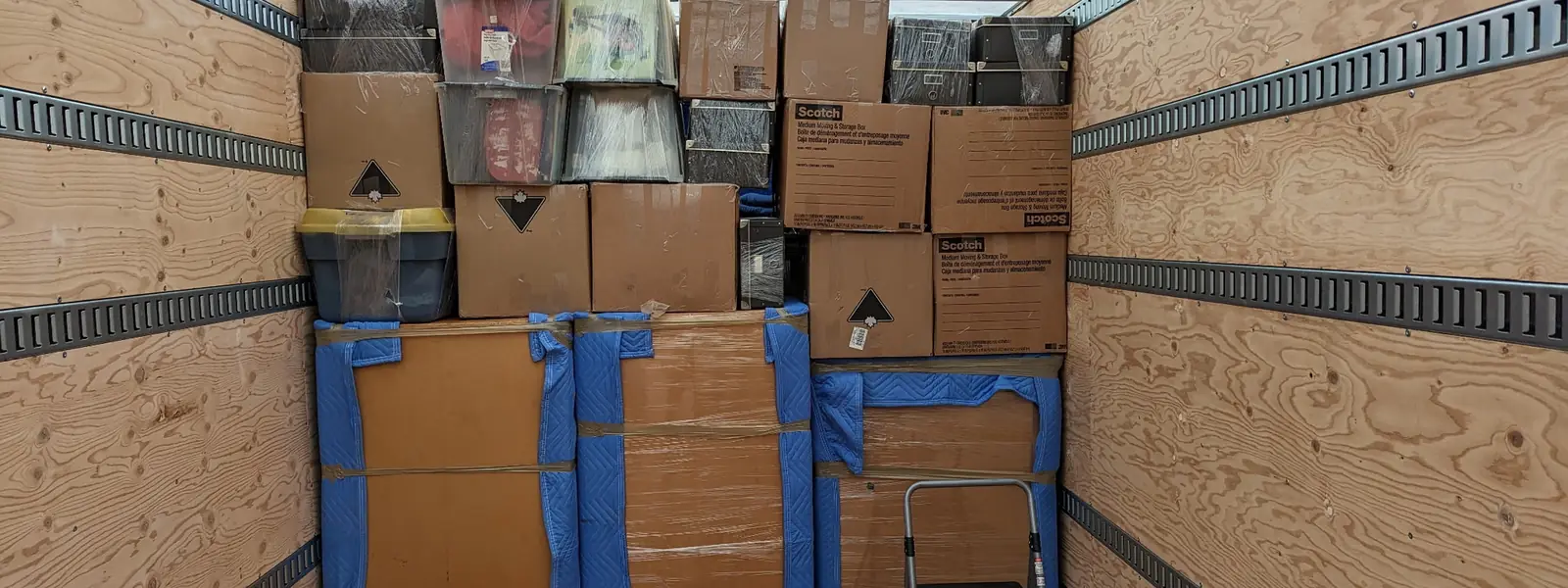
Boxes of the same few sizes stack solidly in a truck. Mismatched boxes from the grocery store are fine for books and clothes, but they are weaker and stack badly.
Pack boxes so they do not collapse
Fill every box to the top. Half-empty boxes collapse when another box is stacked on them. Fill gaps with packing paper, towels or clothing. Put heavy items at the bottom and lighter ones on top, and keep each box to a weight you can carry comfortably — around 45 pounds is a good limit.
Tape the bottom of each box with two or three strips across the seam and one along each edge. Most box failures start at the bottom.
Protect fragile items properly
- Plates: wrap each one in unprinted packing paper and pack it on its edge, like records. Plates stacked flat break under pressure.
- Glasses and stemware: wrap individually, pack upright in a cell box, and put the heaviest glasses at the bottom.
- Mirrors and framed pictures: use mirror cartons or sandwich them between pieces of cardboard, and mark the box “glass”.
- Lamps: pack the lampshade separately; remove the bulb; wrap the base.
- Electronics: original boxes are best. Otherwise wrap in a blanket or bubble wrap. Photograph the cables before unplugging them, and bag and label each set.
Avoid newspaper on dishes and fabric — the ink transfers.
Use what you already have
- Towels, sheets and clothes make good padding for fragile items and save paper.
- Suitcases and laundry baskets can be packed like boxes.
- Dresser drawers with light clothing can often stay full; wrap the dresser and it travels as one piece. Heavy drawers should be emptied.
- Zip bags for screws and small hardware: tape the bag to the furniture it belongs to.
- Plastic wrap over open bottles of shampoo and cleaning products, under the cap, prevents leaks.
Label so you can find things
Write on two sides of every box, not on the top — stacked boxes hide their tops. Write the room where it goes in the new home and a few words about the contents. Number the boxes and keep a simple list if you want to be thorough. Colour-coded tape or stickers by room make unloading much faster: the crew sees at a glance which room each box belongs in.
Mark “fragile” and “this side up” only where it matters. If every box says fragile, none of them does.
Pack an essentials box
The last box you pack should be the first one you open. Put in it what you need for the first night and morning: toilet paper, soap, towels, bedding, phone chargers, medication, a kettle and coffee, a few dishes and utensils, basic tools, snacks, pet food and important documents. Keep it with you in the car, not in the truck.
Things that should not go in the truck
Keep jewellery, cash, passports and important documents with you. Do not pack propane tanks, gasoline, paint, solvents or other hazardous materials — movers cannot carry them. Empty and defrost the fridge and freezer a day before, and use up or give away perishable food.
Get the furniture ready
Take apart beds, tables and anything else that comes apart, and keep the hardware in labelled bags. Remove shelves from bookcases. Take down curtains and wall décor. Movers can do this, but on an hourly move, every job you finish before they arrive saves money.
The last two days
- Clear a path from each room to the door.
- Put all boxes in one or two rooms near the exit, stacked by weight.
- Check closets, cupboards, the balcony and the storage locker one last time.
- Reserve the elevator and confirm the parking permit.
When to get help
If you are short on time, the kitchen and fragile items are where professional packing pays off most: they take the longest and break most often when packed in a hurry. Our packing services can take care of one room or the whole home the day before your move, with all the materials. For everything else, see local moving or check prices on the pricing page.