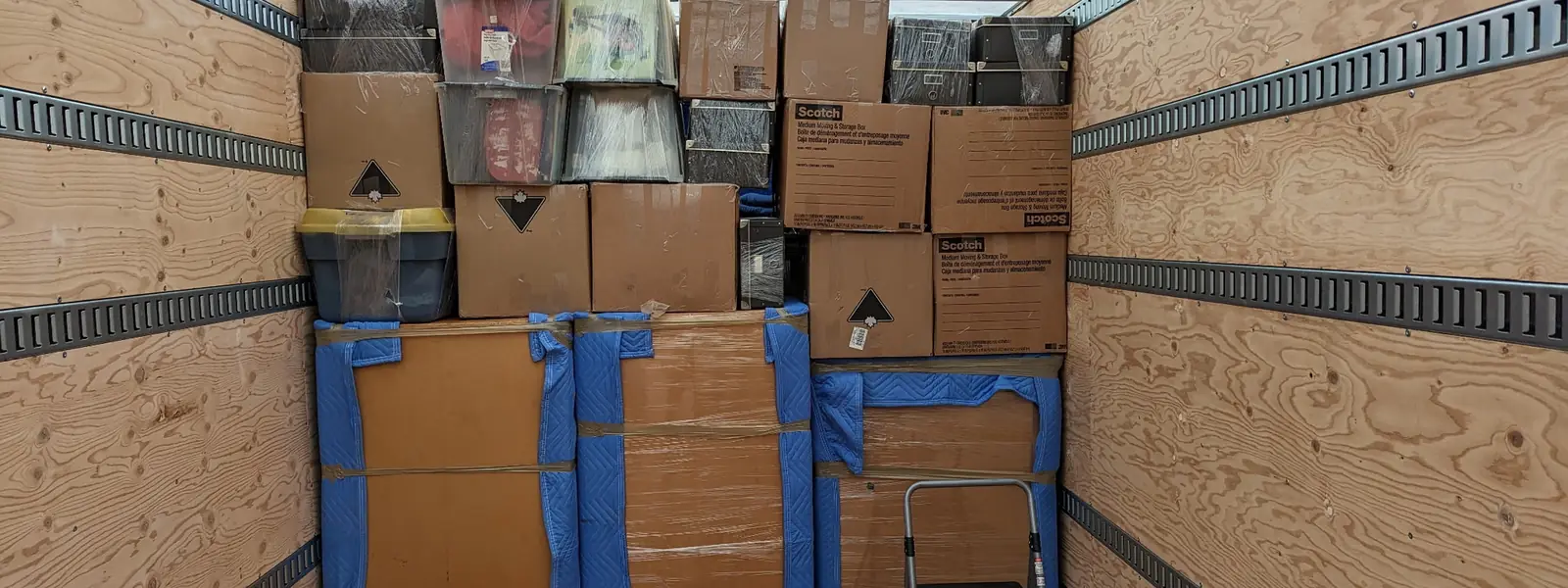
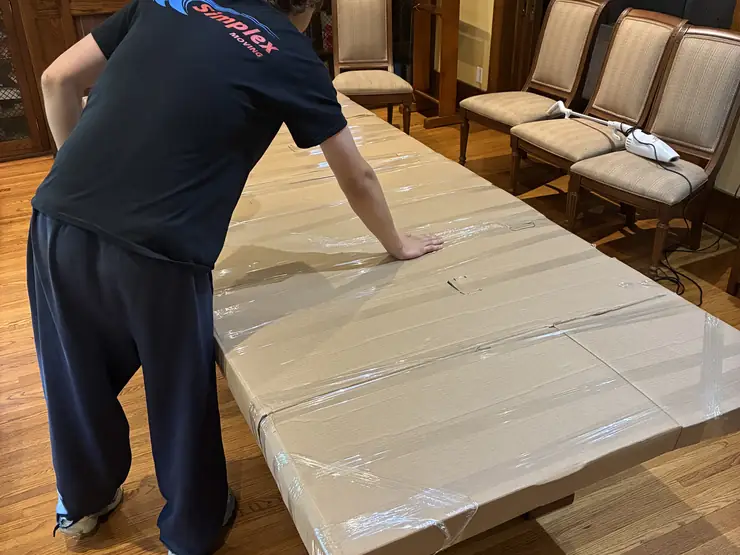
Corporate relocation for companies in Montreal
When a company asks an employee to move — to open an office, to take a role at head office, to transfer between provinces or across the border — the move itself becomes part of the job offer. A relocation that goes badly costs more than money: it costs the employee’s first months, and sometimes it costs the hire.
Our corporate relocation service handles the household move of your employees and executives to, from and within Montreal. We work directly with HR teams and with relocation management companies, apply your relocation policy, bill the company directly and give you one account manager who knows every open file.
Who we move
- Employees transferring into Montreal from elsewhere in Quebec, from other provinces or from the United States.
- Employees leaving Montreal for another office in Canada or in the US.
- Executives whose homes need the level of care described on our luxury and estate moving page.
- Groups of employees moving at the same time when an office opens, closes or consolidates.
- New hires whose relocation package includes the move.
How a corporate relocation works
Setting up your account
Before the first move, we agree the rules with you: what your policy covers (full packing, unpacking, storage days, vehicle shipping, specialty items), who in your company authorizes a move, how approvals are sent, how invoices are addressed and what information HR needs at the end of each move. This takes one conversation and a short written summary. After that, each new move is a matter of sending us the employee’s name and dates.
Surveying each move
Each employee gets a survey — by video for most homes, in person for large houses or executive homes. The survey produces an inventory and a written quote that we send to your authorized contact, not to the employee. Once approved, the move is scheduled with the employee directly.
Keeping the employee informed
Relocating employees are usually juggling a new job, a new city and often a family. We give them a named contact, a written schedule for packing, loading and delivery, and a simple checklist for the weeks before. If something changes — a closing date moves, a lease falls through — they call us, and we update HR.
Moving, storing and delivering
The move is done by our own crew and trucks: packing (full or partial, according to the policy), loading, transport and delivery. When the new home is not ready, belongings go into short-term storage and are delivered when it is. For moves out of the region the price is fixed by inventory and distance, and the delivery window is agreed in advance.
Closing the file
At the end of each move you receive one invoice that matches the approved price, a short closing report and, if any, a record of claims and how they were settled.
Moves within Quebec, across Canada and to the United States
Most corporate moves we handle start or finish in Montreal. Within Quebec, typical destinations are Quebec City, Gatineau, Sherbrooke and Trois-Rivières; see moving within Quebec. Between provinces, Toronto, Ottawa, Calgary and Vancouver are common; see interprovincial moving.
Cross-border moves need more paperwork. For a move from Canada to the US, the employee declares household goods to US Customs and Border Protection using CBP Form 3299 with a detailed inventory; for a move into Canada, the employee declares personal effects to the Canada Border Services Agency on form BSF186, with a list of goods to follow. We prepare the inventory and the forms with the employee so they are correct before the truck reaches the border. The details are on our Canada–USA moving page. Immigration, work authorization and tax questions remain with your legal and relocation partners.
Working with relocation management companies
Many companies outsource relocation to a relocation management company that coordinates home finding, temporary housing, immigration and the move. We work within that structure: the RMC authorizes, we survey and quote, we move, and we report to them in the format they use. The employee gets the same crew and the same care either way.
What HR teams get
- One account manager who knows your policy and every open move.
- A written quote per move, approved before scheduling, so budgets hold.
- Direct billing to the company, with anything outside the policy billed to the employee only with their written agreement.
- Status updates for each open move and a closing report for each file.
- A consistent standard of service whether the employee is a new graduate or a senior executive.
Executive relocations
Executive moves often involve large homes, art, wine, vehicles and tight schedules around a start date. We assign a dedicated move manager, carry out an in-person walkthrough and plan the move over several days if needed. High-value items are inventoried with photographs and crated when needed, and the executive’s family deals with one person throughout.
A relocation policy checklist for HR
If your company is writing or updating a relocation policy, these are the questions that affect the household move most. Settling them in advance avoids case-by-case negotiation later.
- Packing: full packing, packing of fragile items only, or self-pack?
- Unpacking: included, optional or excluded?
- Storage: how many days of storage in transit are covered?
- Specialty items: pianos, hot tubs, safes, wine collections, vehicles — covered, capped or excluded?
- Volume limits: is there a maximum volume or weight?
- Insurance: is extra valuation coverage provided for high-value items?
- Disposal: are removal of unwanted furniture and donations covered?
- Pets and plants: who handles them, and are costs covered?
- Approval: who in the company approves each move, and within what time?
- Billing: does anything outside the policy go to the employee, and how is it agreed?
We can share a simple template for these decisions.
Relocation costs, by type of move
| Type of move | How it is priced | Typical duration |
|---|---|---|
| Within Greater Montreal | Hourly or fixed, as authorized | one day |
| Montreal to elsewhere in Quebec | Fixed price by inventory and distance | one to two days |
| Montreal to another province | Fixed price by inventory and distance | one to eight days in transit |
| Canada to the United States | Fixed price, customs paperwork included | several days door to door |
| International by container | Fixed price for the Montreal side, forwarder quote for the rest | several weeks |
The employee’s experience
Relocating employees remember the move as part of how their new employer treated them. A few things make the biggest difference: a clear schedule early, a named person to call, an honest estimate, a crew that arrives on time, and a delivery that happens when promised. When there is bad news — a delay at the border, a truck held by weather — the employee hears it from us first, with a new time, and HR is copied.
Confidentiality
Executive moves, office openings and transfers are sometimes confidential until announced. Our account managers and crews treat every relocation file as confidential, and we do not mention clients or moves publicly.
Getting started
Most companies start with a single move and a short conversation about their policy. After the first move, we propose a simple account setup — authorized contacts, billing details and the standard services per employee level — so every later move is booked in a few minutes.
Group moves and office relocations
When several employees move at the same time — an office opening in another city, a team transferring to head office, a consolidation of two sites — the moves need to be coordinated rather than handled one by one. We plan group moves as a single project: surveys scheduled together, loading dates staggered so each family has a crew and a truck, shared trailers used where dates and destinations allow to lower the cost, and one report for HR showing every employee’s status. When the office itself is moving too, the same coordinator plans the office move so furniture, equipment and people arrive in the right order.
Measuring the relocation
For companies that relocate employees regularly, we can report on what matters to HR: time from authorization to delivery, cost per move against policy, claims, and employee feedback. It helps you see whether the policy works and where it could be adjusted.
Tax and policy questions
Relocation benefits can have tax consequences for the employee and reporting obligations for the employer, and the rules differ between Quebec, the other provinces and the United States. We do not give tax advice, but we provide clear invoices per move, separated by service, so your payroll team or accountant has what they need. If your policy distinguishes between services the company pays and services the employee pays, we invoice them separately from the start.