Local moving across Greater Montreal
Most moves we do are local: an apartment on the Plateau to a condo in Griffintown, a duplex in Rosemont to a house in Laval, a townhouse in Brossard to a bungalow in Pointe-Claire. Local moving covers anything within Greater Montreal — the island, the West Island, Laval, the North Shore, the South Shore and Vaudreuil-Soulanges — and it is billed by the hour, because on a local move the only real variable is time.
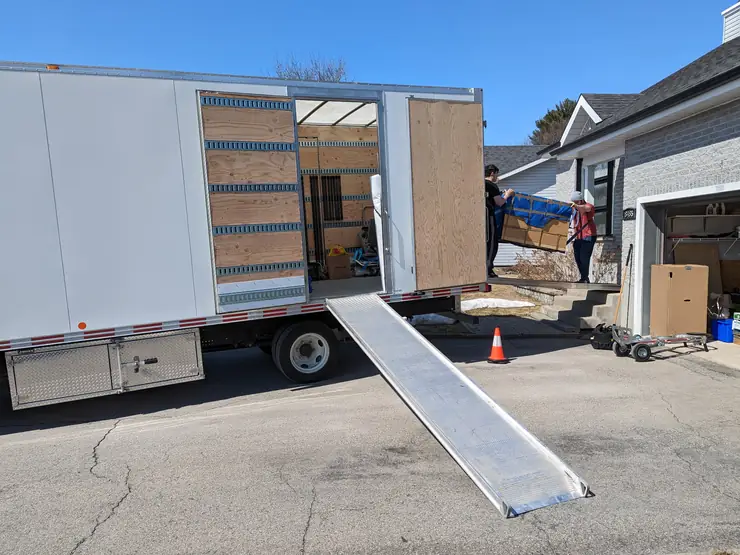
We keep local moving simple on purpose. You get a written estimate with a crew size, a truck, an hourly rate and a realistic range of hours. The crew arrives in a Simplex truck at the start of the window we agreed. The clock starts at your door, not in our yard. Travel time for the drive is 1 hour at the same rate, there is a 2-hour minimum, and no other surcharges — no fuel fee, no stair fee, no weekend premium.
Rates for local moves
| Crew | Truck | Best for | Hourly rate |
|---|---|---|---|
| 2 movers | 22 ft | Studio, 1½, 3½, small moves | $120 |
| 3 movers | 22 ft | 4½, 5½ apartments | $160 |
| 3 movers | 34 ft | townhouses, large apartments, small offices | $180 |
| 4 movers | 34 ft | Houses, large condos, 4+ bedrooms | $220 |
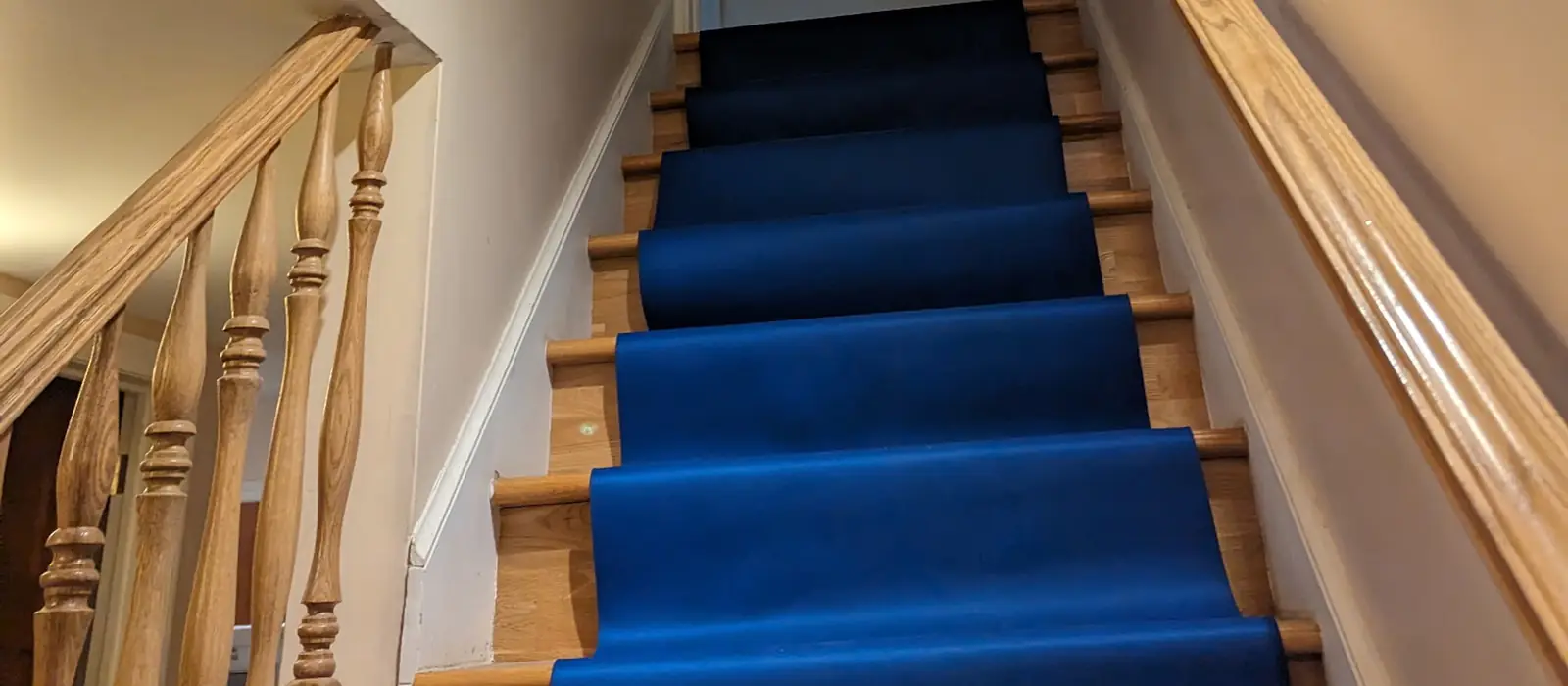
The rate includes the truck, fuel, blankets, stretch wrap, straps, dollies, floor protection and the disassembly and reassembly of standard furniture. What changes your total is time, and time depends mostly on four things: how much you own, how many stairs there are, how far the truck parks from the door, and whether the boxes are packed and closed when we arrive.
Apartment moving
Apartment moves are the core of what we do. In Montreal that usually means a plex with an exterior staircase, a narrow interior stairwell with a turn at every landing, or a small walk-up building with no elevator. Our crews know which box springs make the turn and which sofas need their legs off, and we measure before we force anything.
A one-bedroom (3½) with a reasonable amount of furniture and packed boxes usually takes two movers four to five hours between two second-floor apartments. The same move from a third floor to a third floor can take six to seven. If your building has no elevator and you are above the second floor, a third mover often pays for itself: the carrying is shared, nobody waits on the stairs, and the job finishes sooner.
Condo moving
Condo moves are usually easier on the stairs and harder on the rules. Most buildings require an elevator reservation, protective pads in the cab, a set time window and a certificate of insurance naming the syndicate of co-owners or the management company. Some only allow moves on weekdays or before a certain hour.
We handle that side for you: we confirm the reservation and the rules with the building, bring the elevator padding, and send the insurance certificate directly to the manager. On the day, one mover stays at the truck and loading dock while the others work the elevator, so the booking window is used efficiently. If your building’s window is short, tell us — we size the crew to finish inside it.
House moving
A house move is a question of volume. Bedrooms are only part of it: the basement, the garage, the shed, the patio furniture and the attic are where estimates go wrong. For homes of three bedrooms or more we ask for a walkthrough, in person or by video, so the estimate includes everything that is actually going on the truck.
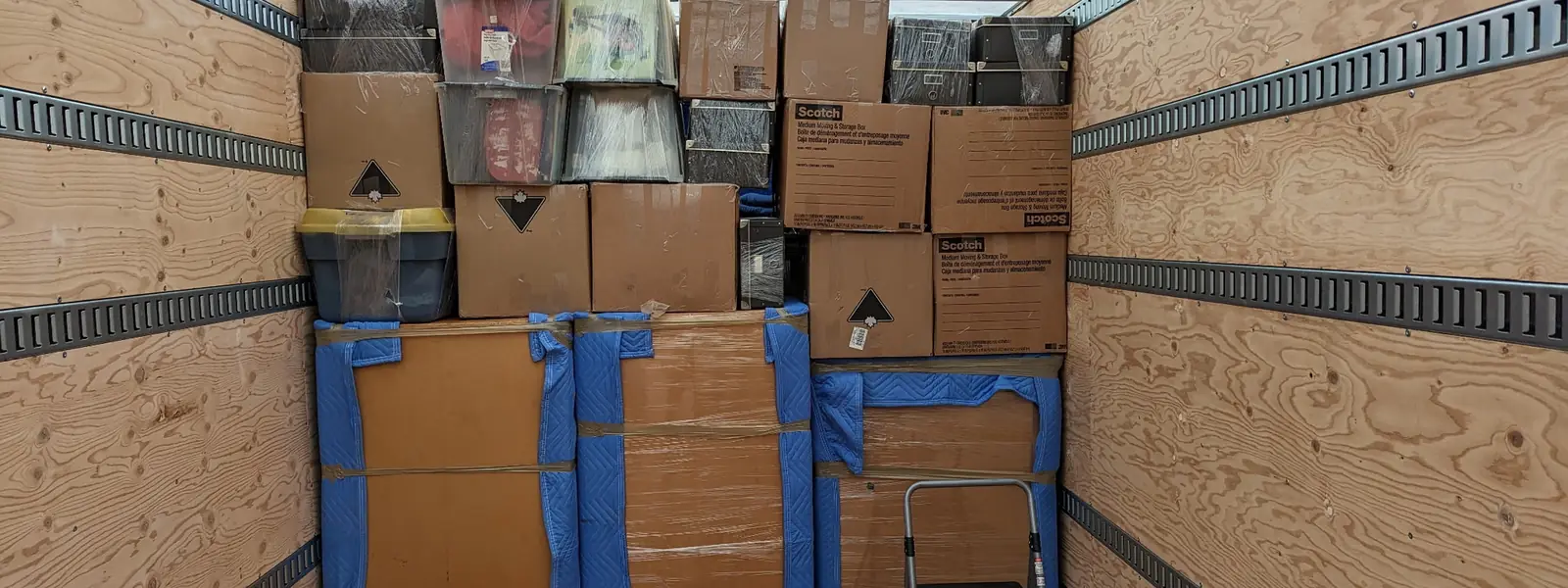
Houses usually need four movers and a 34-foot truck, sometimes a second truck. The crew works in parallel: two in the house wrapping and bringing items to the door, two loading the truck so that heavy items go in first and nothing shifts on the way. At the new house, furniture goes straight to the right room using the labels on your boxes and a floor plan if you have one.
Small moves and same-building moves
Not every move is a whole home. We regularly move a few pieces of furniture, the contents of a single room, a storage locker, or everything from one unit to another in the same building. A small move is billed like any local move, with the 2-hour minimum, which covers most jobs of this kind comfortably. Same-building moves — from the fourth floor to the ninth, or from one apartment to the next — are quick when the elevator is booked and the boxes are ready, and we often finish them inside the minimum.
Last-minute moving
Plans change: a lease falls through, a sale closes early, a relationship ends. When a crew is free, we can often move you within a few days, and sometimes the same day. Call rather than fill in the form — we can tell you in a couple of minutes whether we have a crew and a truck for your date. Last-minute moves cost the same hourly rate; we do not add a rush fee.
How to lower the cost of a local move
- Move mid-month and mid-week. The first and last days of the month and Saturdays book out first; a Tuesday on the 15th gives you a choice of crews and an early start.
- Pack and close every box before we arrive. Packed, labelled, stackable boxes are the single biggest time saver on an hourly move.
- Make sure the truck can park at the door. A parking permit or a reserved driveway can save an hour on its own.
- Take apart what you can. Bed frames, desks and tables that are already disassembled go straight onto the truck.
- Move less. Sell or donate what you will not use in the new place before moving day, not after.
What to expect on moving day
The crew chief calls when the team is on the way. On arrival, they walk through the home with you, confirm what is going and what is staying, and put down floor protection. Furniture is wrapped in the room, not on the sidewalk. Boxes are loaded by weight so that nothing crushes anything else. At the new address, protection goes down again before the first item comes in, and every piece of furniture is placed in the room marked on it. Beds are reassembled, and the crew chief walks through with you once more before you sign off.
We move homes every day on the island of Montreal and across Laval, the North and South Shores, the West Island and Vaudreuil-Soulanges. If you are leaving the region, have a look at moving within Quebec or interprovincial moving, which are priced as a fixed amount rather than by the hour.
Local move checklist for Montreal
| When | What to do |
|---|---|
| 4–6 weeks before | Book the move; ask your building about elevator reservations and moving hours |
| 3 weeks before | Start packing rooms you use least; plan what to sell, donate or throw away |
| 2 weeks before | Confirm whether your street needs a parking permit and file it; order boxes |
| 1 week before | Transfer Hydro-Québec, internet and insurance; set up Canada Post mail forwarding |
| 2 days before | Defrost the freezer, disconnect electronics, take down curtains and wall décor |
| Moving day | Keep a clear path, keep essentials with you, walk through both homes with the crew chief |
What slows a local move down — and how to avoid it
Most local moves that run over their estimate do so for the same reasons. Boxes that are not packed or closed when the crew arrives are the biggest one; the crew waits or packs at the same hourly rate. A truck parked far from the door adds a walk to every trip. Elevators that were not reserved, or are shared with another move, stop the crew in the lobby. Furniture that does not fit through a door or up a staircase needs to be taken apart or hoisted, which takes time if it was not planned. And items that were not on the estimate — a basement full of boxes, a second fridge, a piano — change the crew and truck needed. All of these are easy to prevent with a few minutes of preparation and an honest inventory.
Local movers you can check
Before you book any local mover, check three things: that the company can give you a transport permit number and a certificate of insurance, that the people who arrive are its own employees rather than subcontractors, and that the price in writing lists the hourly rate, travel time, the minimum and anything not included. Ours are on the pricing page and on every estimate. You can also read what customers wrote about their moves below, quoted word for word from Google.
Paying for a local move
Local moves do not need a deposit. At the end of the job, the crew chief totals the hours from arrival to the last item placed, adds travel time and any materials you ordered, and you pay by card, e-transfer or cheque. The invoice shows the start and end times so you can check it against your own watch. If the move is taking longer than the estimate because of something neither of us expected, the crew chief tells you during the move, not at the end.