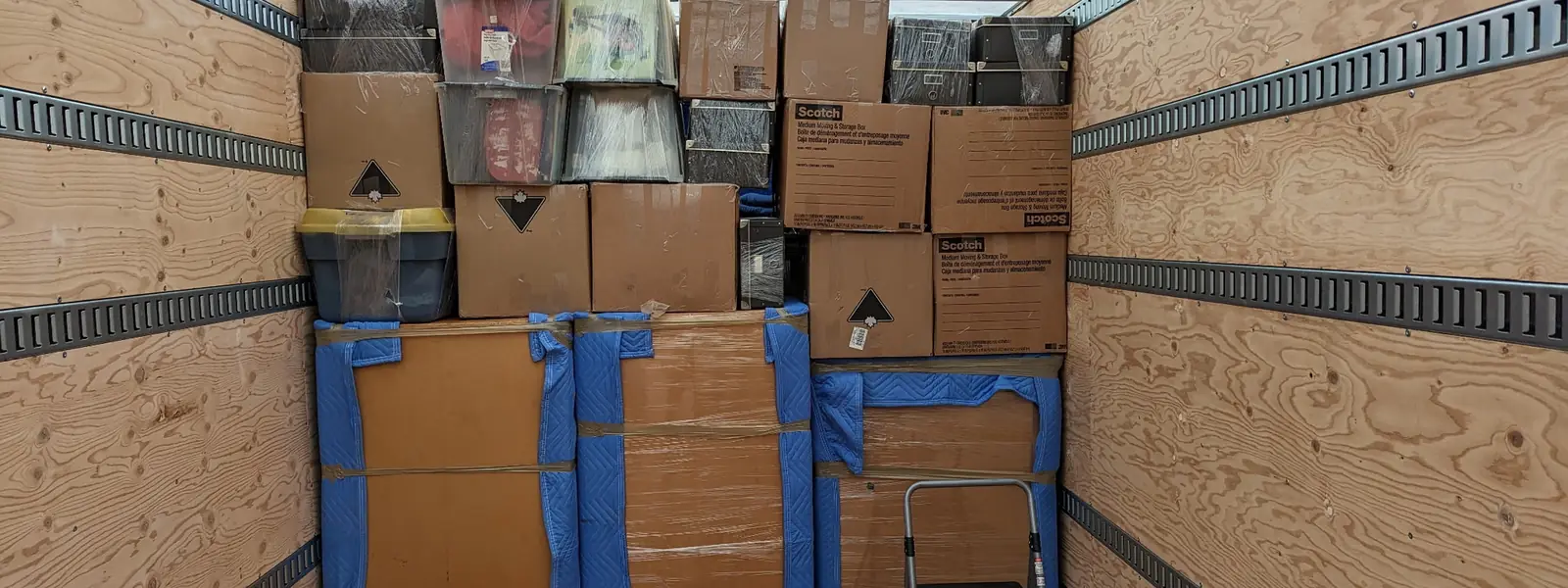
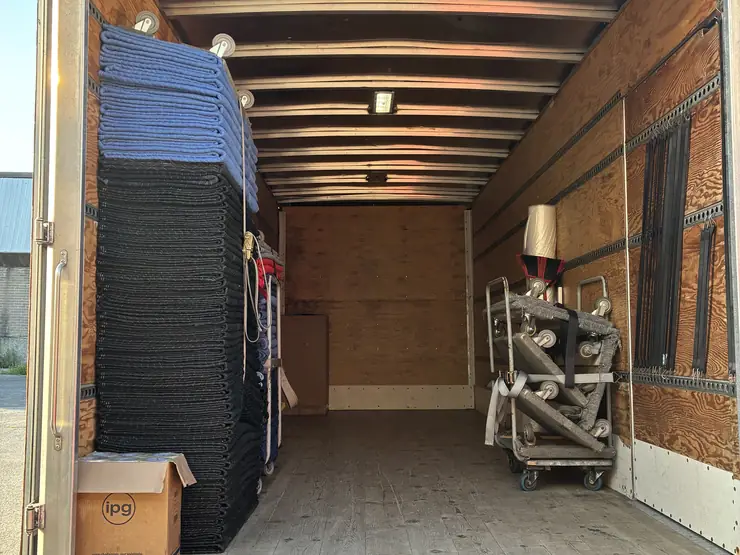
Leaving Montreal for the United States
A move to the US starts at your kitchen table, not at the border. The questions that decide how smoothly it goes are simple ones — what are you taking, how long have you had it, and what should stay behind — and they need answers before the first box is packed. We survey your home, go through those questions with you, and turn the answers into an inventory and a declaration that US Customs and Border Protection can process without surprises.
The document that matters: CBP Form 3299
When your household goods travel separately from you, they enter the US as unaccompanied articles, and the usual declaration is CBP Form 3299, the Declaration for Free Entry of Unaccompanied Articles. It says who you are, what you are bringing and why it qualifies for free entry. It goes together with:
- the numbered inventory of the shipment, with a clear description of every box and piece of furniture;
- a copy of your passport;
- proof of your status in the US — a visa, a green card or proof of citizenship;
- your new US address.
You sign the form; you are the importer of your own belongings. We fill it in with you and make sure the inventory attached to it describes exactly what is on the truck.
The one-year rule
For household effects — furniture, dishes, linens, books, artwork and the like — duty-free entry generally depends on one condition: you or your family used them for at least one year in a household where you lived, and they are not intended for sale or for someone else. The year does not have to be continuous and does not have to be the year right before the move. Personal effects such as clothing are treated separately. What this means in practice:
- Furniture you have lived with for years is usually straightforward.
- Items bought in the last few months, especially still in their boxes, may not qualify. List them honestly; do not bury them in a box of linens.
- Anything that looks like stock for resale — ten identical items, goods for a business — follows commercial rules and needs a customs broker.
CBP makes the decision, not the mover. What we control is how clearly the inventory tells CBP what it is looking at.
What stays in Montreal
Some things are restricted or prohibited in a household shipment entering the US, and a single one can hold up everything else on the truck:
- alcohol, which is also regulated state by state;
- fresh food, plants, seeds, soil and firewood;
- items made from protected species;
- firearms and ammunition, which have their own federal process;
- gasoline, propane, paint, solvents and other hazardous materials;
- cash, jewellery and important documents — these travel with you.
We walk through the inventory room by room before loading and set aside anything that could cause a problem.
Vehicles and pets
A car or motorcycle is not household goods. The US has separate safety and emissions requirements for imported vehicles, and not every Canadian vehicle meets them without paperwork or modification — check with CBP early. Pets never travel in the moving truck; dogs and cats crossing into the US must meet current entry requirements, which you arrange yourself before you travel.
Common mistakes
- “Miscellaneous” on the inventory. “Kitchen: plates, pots, small appliances” is useful to an officer; “misc.” is an invitation to open the box.
- Documents that do not match the load. The form, the inventory and the truck must describe the same shipment.
- A case of wine “for the first night”. It is still alcohol at the border.
- Assuming the mover declares for you. The owner declares. We prepare; you sign.
Part-year homes and snowbirds
Moving furniture to a Florida condo you use in winter is not the same, for customs, as moving to live in the US. The rules depend on your status and on how the goods will be used. We move the furniture and prepare the inventory; for the customs treatment of your particular case, check with CBP or ask a customs broker before loading.
What the move looks like
- Survey by video call or at your home, with restricted items flagged.
- Fixed price in writing, naming who carries the shipment across the border.
- Paperwork — the numbered inventory and Form 3299, prepared with you two weeks before loading.
- Packing and loading, in inventory order, with the final list signed.
- Customs entry with documents that match the load; stay reachable by phone.
- Delivery to your new home, unloading, reassembly and placement room by room.
For the reverse trip, see moving to Canada from the USA. For timelines, destinations and pricing that apply in both directions, see Canada–USA moving.