
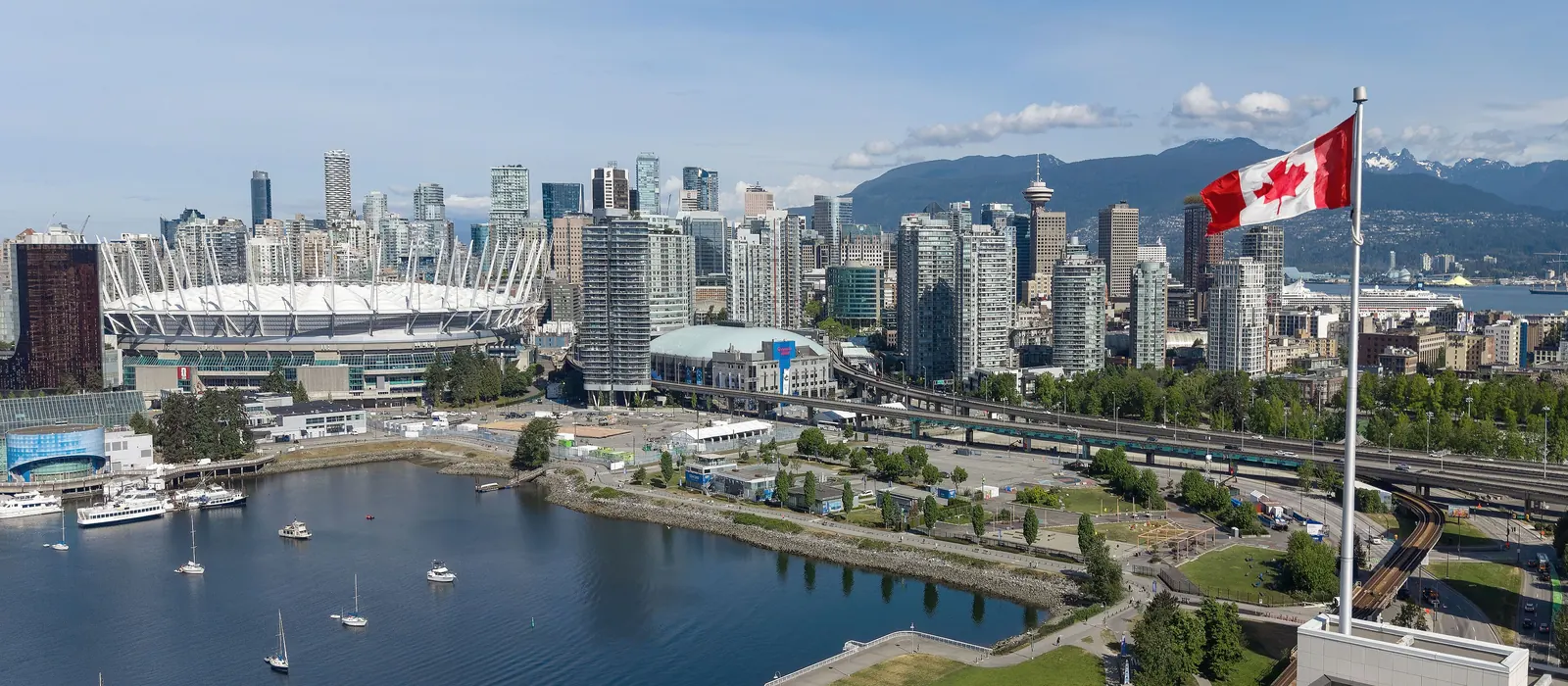
Montreal to Vancouver: coast to coast, almost
Vancouver is about 4,500 km from Montreal — the longest route we quote, and about 46 hours of driving before stops. The truck crosses Northern Ontario, the Prairies and then two mountain ranges: the Rockies and the Coast Mountains, on the Trans-Canada or the Coquihalla. With a dedicated truck, that is six to eight days from loading in Montreal to delivery in Vancouver.
As with every long-distance move, you get one fixed price in writing, from your inventory, before anything is loaded, and a delivery window agreed at the same time. On a route this long, the planning starts earlier and the sorting matters more.
Measure the new home first
The most common surprise on this route is not the drive — it is the destination. Homes in Vancouver are often smaller than the ones people leave in Montreal: a two-bedroom condo instead of a 5½, a townhouse instead of a house. Before you ship a sectional sofa or a king bed 4,500 km, check that it fits the new floor plan, the elevator and the hallway. The survey helps: we list what is going, and you can decide with the volume and the price in front of you.
Mountain passes in winter
Between November and April, the highways through the Rockies and the Coast Mountains close from time to time for avalanche control, heavy snow or accidents. Closures are usually a matter of hours, and commercial trucks carry chains on the mountain routes. We build winter conditions into the delivery window rather than promise a date the mountains may not keep. If your dates are flexible, late spring to early fall is the easiest time to cross.
Dedicated truck or shared trailer
A dedicated truck delivers in six to eight days. A shared trailer travels with other westbound shipments, costs roughly 30% less and delivers within about three to four weeks. Many people moving to Vancouver fly out ahead and live in a furnished rental while the shipment crosses the country — in that case, shared is often the better value.
Arriving in Vancouver
Much of Vancouver lives in condos and townhouses. A condo delivery needs an elevator booking, sometimes a loading bay and a move-in window set by the strata; book it first, then confirm the date with us, and send us the strata or property manager’s contact for the certificate of insurance. Houses in Burnaby, Richmond, Surrey, the North Shore and the Tri-Cities often have steep driveways and stairs; tell us the address at the survey.
Settling in British Columbia
Apply for BC’s Medical Services Plan when you arrive — there is a waiting period, so check the dates against your RAMQ coverage. Your driver’s licence and vehicle insurance go through ICBC, and your address changes with the CRA. If you move for work, keep the moving receipts for your tax adviser.
From Vancouver to Montreal
Moving east works on the same terms: one fixed price in writing, a dedicated truck in six to eight days or a shared truck inside a longer window. The truck crosses the same mountain passes in the other direction, so winter moves carry the same weather buffer.
- The Vancouver end. Condo move-outs need an elevator booking and a time slot from the strata; book them first, then confirm the date with us. Houses in Burnaby, Richmond, Surrey and the North Shore are loaded from the driveway.
- The Montreal end. Expect stairs: much of Montreal lives in duplexes and triplexes with outdoor staircases. On most streets the truck needs a temporary parking permit from the borough, which you request; we tell you how much curb space is needed.
- July 1. Many Quebec leases end on June 30, and the days around July 1 are the hardest to book. If your lease in Montreal starts on July 1, reserve early or plan a few days of storage.
- After the move. Register with the RAMQ for Quebec health coverage, exchange your BC licence with the SAAQ and register your vehicle in Quebec within the deadlines they set. If your children will study in English, check their eligibility for English schooling first.
For Victoria, Kelowna and other BC destinations, see interprovincial moving.
